Last year I decided to pick up Monday’s Not Coming by Tiffany D. Jackson, and was excited when I found out about her new novel and today’s selection, Let Me Hear a Rhyme. Set in Brooklyn in 1998, a year after the death of The Notorious B.I.G, the book follows three teenagers as they come to grips with a death in their own neighborhood, and decide that this time, the young man will not be another statistic or name people read in the newspaper.
The Situation: It seems impossible, but Steph has been killed. His best friends, Jarrell and Quadir, can hardly believe it. The spot in Brooklyn where the three of them would hang out will never be the same. Already, their end of summer tradition of visiting Coney Island - a combination of marking the end of summer, and welcoming a new school year - has been called off. Steph’s younger sister, Jasmine, is not only drowning in grief, but she is also attempting to hold together what is left of her family. First it was her father, and now it is Steph. It is while hanging out in her brother’s room after the funeral that Jarrell and Quadir find her, and together they discover the music Steph was working on. All three of them acknowledge he was one of the best. The lyrics he wrote down were nothing short of miraculous, and the rhymes he could come up with on the fly were a revelation. Ultimately, they figure that the world does not have to miss out on hearing them just because Steph is dead.
The Problem: Getting a record deal for someone who is living is no easy thing. Scoring one for someone who is no longer alive is almost impossible...maybe. Jarrell, Quadir, and Jasmine’s plan is simple enough: take the tracks that Steph had already laid down, make a bunch of copies, and get them circulating. Once people hear them at parties, and from the tables of vendors that have agreed to sell them, people will be hooked. They are all both surprised and not surprised at how well their plan works, gaining Steph - whom they have decided to call ‘the Architect’ - the attention of one of the hottest producers around. But the longer they go on with their plan, and the closer they get to finding out what really happened to Steph, the harder it becomes to keep everything going without it all spinning out of control. Soon, all three of them are in over their heads as they each have their own secrets and motives. If they want to bring the right attention to Steph’s talent and finish what they set out to do, they will not only have to stick together, but also do the impossible, and find out who killed him.
Genre, Themes, History: This is a young adult fiction novel set in Brooklyn in 1998. It is a time when hip-hop lovers everywhere were discussing their theories as to who killed Tupac and Biggie Smalls. Since this book is all about Brooklyn, Jarrell and Quadir naturally align themselves with the east coast rappers like Biggie, Jay Z, Nas, and the Wu-Tang Clan. While Jasmine does not necessarily disagree with them, she also would like for female rappers to gain the same kind of attention, and not because of how they look or dress. She may be younger than her brother and his friends, but she refuses to be treated like a child and like she cannot hold her own. While others may find her love for her natural hair and habit of speaking seemingly random black history facts odd, she keeps at it, even when it makes her feel alone, or not one of the crowd. And then there is Steph, the talented you man who never got the chance to share his skills, so his friends fight to do it for him. They refuse to let him become another black teen killed in the hood, and Jasmine refuses to let whoever is responsible get away with taking her brother from her. Everyone handles grief differently, and these three decide to use it to give Steph what he deserved in life.
My Verdict: In Jackson’s acknowledgements, she states that this is a love letter to her hometown of Brooklyn, to hip-hop, and to those who were taken to soon. It is a lovely tribute to all three of those things, with smart and dynamic characters that are desperate to do right by a friend and brother. Every setting and scene is beautifully set, and the mention of the various musicians that were popular at the time will bring back great memories for anyone who was alive at the time. Even those who cannot remember when Mix CDs were a thing, or when MTV still played music videos, will be able to fully imagine and enjoy 1990s Brooklyn. Add on top of it the mystery as to what happened to Steph, and readers are in for an adventure with a 90s hip-hop soundtrack. At the very least, nearly everyone will be able to identify with the feeling of wanting to do something for someone they lost, even when it seems like there is nothing to be done.
Favorite Moment: When Jasmine’s mom slapped an uppity executive who had the nerve to act a fool in her house.
Favorite Character: I adore Jasmine, and I feel her pain. It can be a strange thing to know that what your likes and dislikes are what make you different, and what make many people not want to be around you, but you also have very little desire to change.
Recommended Reading: Monday’s Not Coming is worth a read, and I also recommend Angie Thomas’ On The Come Up.
 Since I relish an opportunity to cover a graphic novel, and I adore Rainbow Rowell, it was an easy decision to pick up Pumpkinheads by Rowell and Faith Erin Hicks. The cover alone made me excited to more or less sit back and enjoy a fun story of two high school seniors enjoying their last shift at the local pumpkin patch.
The Situation: Deja and Josiah are best friends...but only between September 1 and October 31 of every year. Once Halloween is over, the pumpkin patch closes, the corn maze is steamrolled, and both Deja and Josiah return to their respective lives as it exists without the persistent smell of kettle korn, and the required uniform of a plaid shirt and overalls. But when they are working at the Succotash Hut, they are pretty inseparable, and have gotten to know each other pretty well over the last four years. But this is senior year, which means it is their last year working together at the pumpkin patch. Deja is all about taking this opportunity to experience, and eat, everything the pumpkin patch has to offer, while Josiah is a little more somber and reflective. Almost from the beginning, this final shift will prove to be much different from any other.
The Problem: For the most part, Josiah is the reflective and over-thinking type. He almost always earns employee of the month, and he takes his duties at the pumpkin patch incredibly seriously, even if it mostly entails stirring and serving succotash. But as dutiful as he is to the job, somehow he has never been able to commit to gathering up the courage to talk to Marcy down at the Fudge Shoppe. Every year he admires her from afar, and does nothing to get to know her. But this year, Deja is determined to change that. She even has the two of them moved to work at the Pie Palace in order to be closer to the Fudge Shoppe. It seems like a full-proof plan, but things begin to go awry almost immediately. After a night of eating, dealing with kids hyped up on sugar, and getting lost in the pumpkin patch despite knowing the staff shortcut, Deja and Josiah's last shift turns into something completely different from what either of them had planned. And they both may finally realize that this friendship does not have to be seasonal.
Genre, Themes, History: This is a graphic novel set during the last night at the pumpkin patch. It's Halloween, and it's the last night for caramel apples, s'mores, apple cider slushies, Frito pie, and pumpkin bombs, and Deja is determined to eat all of them. If she is all about seizing the day and making the most of their last night, then Josiah is on the opposite end of the spectrum, and would be content with simply doing his job as he has always done it, a plan that has allowed him to nearly dominate the Employee of the Month board for as long as he has worked there. Despite how different they are, they have stuck together every season since their first one, and they would not have it any other way. But when Josiah decides to go with Deja's plan to enjoy the night, a plan where the goal is to get him to finally talk to Macy, everything takes a turn no one was prepared for, and the reader is not only taken on a colorful tour of the pumpkin patch, but is also introduced to the various staff members, and even the occasional animal.
My Verdict: So much about this story works. First is the contrast of Deja's determination to have fun and eat everything to Josiah's over thinking and insistence to pretty much do what he has always done, even if it means never talking to the girl he has been fixated on for the last few years. The two of them go well together, even though it seems like they shouldn't, at least on paper. Second is the fun atmosphere and setting of the pumpkin patch, along with the Halloween season. And then of course there are the amazing illustrations, which help to bring across the cooler weather of Autumn, the smell of kettle korn, the fear of seeing a loose goat, the sense of being lost (though not really) in the middle of a corn maize, and the feeling of something important coming to an end. The marriage between the story and the pictures comes out beautifully, and I cannot recommend this book enough.
Favorite Moment: Any moment when Buck the goat shows up, as he has gotten loose and is terrorizing the visitors of the pumpkin patch.
Favorite Character: I like both Deja and Josiah a lot. They both have their quirks, and somehow those quirks serve to balance each other out.
Recommended Reading: Rowell's Fangirl still remains my favorite of all of her books.
 Today's selection has been sitting in my 'to read' pile for quite some time now, mostly due to its length. Daniel Deronda is not the longest book I have read by George Eliot, as Middlemarch will always hold that title. Even so, I knew it would take some time, and more than a little perseverance.
The Situation: It is mid-1860s England, and Gwendolen Harleth can only think of herself. She is young, beautiful, self-centered, somewhat manipulative, and cannot understand why there should ever be any obstacle standing in the way of what she wants. She has four younger half-sisters, but completely dominates her mother's time and is always able to sway her to her will. But it is while she is away in Germany that she crosses paths with Daniel Deronda, and the two begin a friendship that will carry them through the remainder of the novel. As the ward of the wealthy Sir Hugo Mallinger, Deronda does not know who his real parents are, and has simply been raised to be an English gentleman, while occasionally entertaining the possibility that he is actually Sir Hugo's son. Always one to help others, even at great cost to himself, Deronda rescues a young Jewish woman who is moments away from killing herself, and makes it his mission to make sure she is cared and provided for.
Today's selection has been sitting in my 'to read' pile for quite some time now, mostly due to its length. Daniel Deronda is not the longest book I have read by George Eliot, as Middlemarch will always hold that title. Even so, I knew it would take some time, and more than a little perseverance.
The Situation: It is mid-1860s England, and Gwendolen Harleth can only think of herself. She is young, beautiful, self-centered, somewhat manipulative, and cannot understand why there should ever be any obstacle standing in the way of what she wants. She has four younger half-sisters, but completely dominates her mother's time and is always able to sway her to her will. But it is while she is away in Germany that she crosses paths with Daniel Deronda, and the two begin a friendship that will carry them through the remainder of the novel. As the ward of the wealthy Sir Hugo Mallinger, Deronda does not know who his real parents are, and has simply been raised to be an English gentleman, while occasionally entertaining the possibility that he is actually Sir Hugo's son. Always one to help others, even at great cost to himself, Deronda rescues a young Jewish woman who is moments away from killing herself, and makes it his mission to make sure she is cared and provided for.
The Problem: Gwendolen has no interest in being a wife, or a working woman, or basically anything she does not want to be. Unfortunately, her family is in a financial situation that forces her to choose, leading her to become the wife of the awful Henleigh Mallinger Grandcourt, which allows for financial stability for both herself and her mother. Despite this union, she and Deronda remain close, even while Deronda becomes closer to Mirah and her family. This friendship allows for Deronda to learn more about the Jewish people, a subject in which he becomes increasingly interested, much to the annoyance of some of his close friends. As Gwendolen suffers in her unhappy marriage, Deronda struggles with what he learns, which soon includes the truth about his own birth. The time soon comes when he must decide what path he will take, and who he will become.
Genre, Themes, History: The is a fiction novel that first opens upon a scene in Germany in 1865, where Gwendolen is at a roulette table and finds Deronda looking at her. The story then goes back to England in 1864, and explains how both the hero and heroine will find themselves together in that room less than a year later. The first half of the book focuses greatly on Gwendolen, only occasionally mentioning Deronda, and a lot of the time it is only in relation to his interactions with her. The mystery of his parentage is brought up, and his rescue of Mirah is presented, but the novel remains primarily focused on Gwendolen, right up to her marriage to Grandcourt. Once she is clearly established as unhappily married, the real focus on Deronda begins, as well as his new Jewish friends, their history, and their surroundings. More than a few critics have argued that the book's focus should have remained on Gwendolen, as she is considered to be one of Eliot's best characters. Of course, some of these critics would also have liked for the book to be rid of the Jewish section completely, finding it unnecessary. Even so, the book focuses heavily, especially near the end, on the Jewish people, and the general feelings of discrimination against them in mid-19th century England.
My Verdict: It is always a bit confusing when a book is named after one character, but focuses more so on another character, especially right at the beginning. In the case of Daniel Deronda, it was not only confusing, but also frustrating, as Gwendolen Harleth is not a good person. I was eager for her downfall, or at least for her realization that she is not the center of the every one's universe. It was a relief as the book began to focus more and more on Daniel, but it still left things to feel a little off-balance. And as long as the book is, I cannot say that all that much happens in 700+ pages that could not have happened in half that amount. It is not a bad book, just so much of it seemed unnecessary, and I am not joining the critics who believe that the Jewish sections should be cut. That part was interesting, and if anything, could have used more exploration.
Favorite Moment: When Gwendolen is faced with the reality that she can either get married to a wealthy suitor, or become a governess.
Favorite Character: Ezra Mordecai Cohen is *spoiler alert* revealed to be Mirah's brother. From the beginning, he is supportive and sympathetic, while also being more than a little curious (and suspicious) concerning Deronda's true heritage.
Recommended Reading: Eliot's Middlemarch is another one that requires patience, but is a bit more complex, story wise.
 The full title of today's selection is Stay Sexy & Don't Get Murdered: The Definitive How-To Guide by Karen Kilgariff and Georgia Hardstark, hosts of the incredibly popular true crime podcast, My Favorite Murder. I am extremely new to the world of podcasts, and typically reserve them for long drives, so I have not had the pleasure of listening to an episode of MFM, but I plan to change that. This book has introduced me to two personalities I am interested in becoming more familiar with, while also learning more about true crime.
Genre, Themes, History: This is a nonfiction book that is less about the serial killers that Kilgariff and Hardstark have become known for discussing, but more about their separate journeys to become who they are today. Sure, the occasional serial killer or famous case gets thrown out there, but mostly the book is about the mistakes the two women have made, what it was like for them growing up in 1980s-1990s California, and how a mutual obsession led them to be the duo they are now. The two met at a party where they began talking about a popular television series that dealt with a man going on trial for the murder of his wife, and they talked all night. Eventually, after many more talks, Hardstark suggested they start a true crime podcast, and Kilgariff agreed. With an honesty that begins on the first page, and blended with a good amount of humor, the two women discuss the damaging effects of insisting on politeness, the fate of the 'sweet baby angel,' how not to be a lunatic, the value of work, the importance of paying for your own stuff, and much more. It is an offbeat guide for the crazy world we live in, written by women who admit to not having the answers, and that they still get it wrong sometimes.
My Verdict: It is funny, it is honest, it is encouraging, while also a little bit heartbreaking in parts, and I learned a great deal. By their own admission, both Kilgariff and Hardstark have come a long way, and they are here now as proof that it is possible to make it out of the hard times and that they do not last forever. If I had an issue with the book it is that it can feel a bit unfocused. Having them both tell their own story in their own way was fine, as eventually all of the pieces come together, but it felt as if some points that were introduced at the beginning of certain sections ended up being abandoned and forgotten. Other times, it was hard to hold onto the connection that was being made after wading through a meandering (though always interesting and/or entertaining) story. But the overall lightness of it - despite it actually dealing with some heavy themes, and I am not just talking about the serial killers - does not seem in bad taste. Those that are already lovers of the podcast may still learn a few things about their beloved hosts, while those of us who have not listened to the show can still learn something and gain some insight from two women who have made a tough journey to be where they are now.
Favorite Moment: My favorite section was Karen's Advice on How Not to Be Thirteen Forever. In it, Kilgariff explores why being 13 years old is the absolute worst (I would argue that almost all of the teenage years are terrible, but maybe that's just me). Using her own experience as the example, she highlights why 13 is a hard year, and how lunch time in 8th grade can be a social minefield where young girls have already figured out how to be terrible to each other.
Recommended Reading: There is much mention of Michelle McNamara's I'll Be Gone in the Dark, and with good reason. It is easily one of my favorite books from 2018.
 Margaret Atwood has kept readers on the hook regarding what happens to one of her most well-known protagonists for over 30 years. For decades, readers have wondered what really happened at the end of The Handmaid's Tale. Sure, we now have the television series on Hulu, but clearly, many of us were still searching for answers, and now we have them in The Testaments.
The Situation: Aunt Lydia is respected, revered, and venerated as an example not only among the other Aunts, but in all of Gilead. Known to be somewhat cold and often harsh, she is looked to regarding urgent issues that need immediate attention. Now in old age, she has decided to write her story, though in all honesty, it is more of a confession. Not only does it reveal how she got to where she is, but also the careful and calculated means by which she has stayed there. Included in the account are the 'Transcript of Witness Testimony 369A' and 'Transcript of Witness Tertimony 369B,' given by two women who lived on opposite sides of the Gilead/Canada border, but somehow become linked to Aunt Lydia's activities. It seems the once stalwart and reliable Aunt Lydia has decided that Gilead has been allowed to go on long enough, and if you want something done right, you get a woman to do it.
The Problem: Although Aunt Lydia holds a high position, it does not mean she is beyond suspicion, or that her actions cannot be called into question, leading to an outright accusation. If she wants to see Gilead fall, she must be more careful than she has ever been, and sacrifices will need to be made. Also, she cannot do it alone. The testimonies of the two witnesses tell of how they came to know Aunt Lydia, and why the future of Gilead matters most to them. One may have been the daughter of a well-connected Commander, but in Gilead, even such a high position does not guarantee happiness for women. And while the other witness has enjoyed a childhood of freedom in Canada, that freedom came at unknown costs, and the unimaginable will need to be done to keep it. Under Aunt Lydia's machinations, the two women will attempt what has long seemed impossible, and perhaps find out why it was the two of them that she chose.
Genre, Themes, History: This is a fiction novel that is a follow-up to Atwood's classic The Handmaid's Tale. While The Testaments was published 30 years later, the actual action of the book is set only 15 years after the events of its predecessor. Gilead still prospers, though it seems to perpetually be at war with Canada. Both sides have their spies, their secrets, their smugglers, and even their missionaries. The Pearl Girls of Gilead are sent out two at a time into Canada to look for and bring back converts, and if the converts are young women who are able to bear children, then that is even better. While The Handmaid's Tale gave readers a view of Gilead only through the eyes of a Handmaid - women who are assigned to a house where the couple is unable to bear a child of their own, so (hopefully) the Handmaid does it for them - now we can see what it is like for a child living in a Commander's house, with a Handmaid, as well as Martha's of its own. Aunt Lydia's accounts gives more history to Gilead, while also shining a light on its corrupt inner workings. And the third account shows life just outside of Gilead, while still being aware of it. The world of the first book is expanded, offering up both hope and more horror.
My Verdict: Writing a follow-up to a book that was published more than 30 years ago is certainly risky. Personally, I did not much care for The Handmaid's Tale, but I joined many others in more or less deciding for myself what happened after the end of it. It was a smart move for Atwood to begin this book 15 years after the first one, allowing space for more events to occur and for Gilead to fester and become worse than it already was. Normally I do not much care for the choice to have more than one narrator, but in The Testaments, having direct accounts from three different women in three very different circumstances is the way to go. They are all their own characters, each distinct and well-rounded. And the world that Atwood continued to build - the same one she introduced 30 years ago, and one that can often look like our own - is one whose laws, customs, and people will stay with me for a long time. I am certain there are many who will be disappointed with it, but I am not one of them.
Favorite Moment: As a proud Texan, I thoroughly enjoyed learning that Texas seceded from Gilead. And though the resulting war ended in a draw, the state remained separate, much to Gilead's annoyance.
Favorite Character: While I am drawn to Aunt Lydia and the cause she has worked so hard to accomplish, I must choose Becka, or Aunt Immortelle. She enjoyed a semi-privileged life as a child in Gilead, though it was not as wonderful as it seemed, but she maintains her resolve and determination for the greater good.
Recommended Reading: I will go ahead and assume that most who are reading The Testaments have read The Handmaid's Tale, so I will recommend another Atwood classic, Alias Grace.
 Sometimes there are books that we all instantly know are going to be popular, but that does not mean we are going to be interested in reading them. That was certainly me when it came to Daisy Jones & The Six by Taylor Jenkins Reid. It was getting rave reviews before it came out, and readers have been discussing it since. I simply was not sure if I wanted to read a book that reads like an episode of VH1's Behind the Music. But when you find something like this at Half Price Books, and it is actually half price instead of being a new publication that is only marked down by 20%, you gotta go for it.
The Situation: Billy and Graham Dunne are still in their teens when they begin collecting other members for a band. With Billy as the front man and Graham on lead guitar, their six-member band begins to gain more and more attention, all resulting in the group landing a record deal, as well as some terrible backstage habits. The guys (and the one girl) are living the 1970s rock star dream of getting any drug you want, always having enough to drink, and taking whoever you want to bed. But none of them go as hard as Billy, whose addictions are bad enough for him to miss the birth of his first daughter, as well as the first six months of her life. His wife Camila gives him another chance, and he kicks the habits, cuts out the partying, and focuses on the music, all of which Daisy Jones should also do. And when she meets The Six, no one, not even her, could have known what the next few years would bring.
The Problem: Even as a gorgeous girl with an incredible voice who has never had to seriously work for anything in her life, Daisy is a train wreck. Needing both alcohol and drugs to operate in her daily life, she is a clear threat to Billy's sobriety. Out of his love and dedication to Camila and their growing family, he stays as far away from Daisy as possible. Also, he can't stand her, and the feeling is mutual. But it is undeniable that Daisy can sing, and she can certainly put a song together. Before she was introduced to the band, songwriting and singing lead were Billy's areas, with very little input from anyone else. And when Daisy refuses to back down, and the studio agrees that the band needs her, Billy has no choice but to push aside his ego and pride. If that was all there was to it, Daisy Jones & The Six quite possibly would have endured past that fateful performance in July of 1979. As with many musical groups, the issues between the two leads are not the only things going on behind the scenes.
Genre, Themes, History: This is a historical fiction novel set during the 1970s rock scene. Daisy Jones & The Six is not a real band, but the author certainly treats it like one, setting the book up as a beginning-to-end account of an iconic rock group. Assuming the (mostly) unseen interviewer is asking the questions and arranging the information, the different band members, in addition to Camila, the manager, the producer, a few journalists, etc., give their accounts of what happened all those years ago when Daisy Jones & The Six made their climb up the charts, making rock history while struggling to hold everything together. The story is told in a straightforward, chronological manner, but some facts remain nebulous as different band members remember different things. Some of them are very sure about certain details, while others admit to the memories being hazy, and often two or more of them will be very sure of how something happened, while completely disagreeing on the details. What is clear is that Daisy and Billy had a hard time functioning together. She was a threat to his sobriety; he was controlling; she was too pushy; he could only write songs about his wife; she was used to being handed everything; he only though of it as his band; she never wore enough clothing; and on and on it went. Reid has a created a band history in the same vein as Fleetwood Mac and The Mamas and The Papas, and it makes sense that there are already plans to turn the book into a web series.
My Verdict: I was skeptical, of course, as to whether or not I would like it. But Reid had me almost from the beginning with both the format and the style. I have personally only seen a handful of documentaries on musicians, and while they all have their fair amount of drama, it can often be easy to predict what the arc of the narrative is going to be. Reid somehow cuts down the predictability, and much like with the real stories, readers will eagerly wait for the secrets to come pouring out, somewhat desperate to know how it all went down, who said what, and who wronged who. I was super pleased that the story did not go down the usual trail, while still presenting a tale that is dramatic, tense, and incredibly fascinating. It cannot be easy to write a story where a fallout is clearly coming, and keep readers curious to see how it is going to happen, and have them be surprised when it does. It took me back to when my brother was a subscriber to Rolling Stone magazine, but never actually read it, so I would take the issues for myself. Though it is fiction, I do recommend it to lovers of even long form nonfiction about the 1960s-70s rock era.
Favorite Moment: When Simone, Daisy's best friend, basically travels halfway around the world to track Daisy down.
Favorite Character: Camila Dunne is exactly the kind of woman that could turn a man like Billy Dunne around. She is tough, kinda pushy, pretty bossy, and super stubborn. But that is what Billy needs, and it is also what he loves. Somehow, she decides to commit to Billy no matter what, and have faith that he will always come back to her. It is rarely easy, but she sticks with it, and sticks with him.
Recommended Reading: The Great Alone by Kristin Hannah is an interesting look at the challenging task of making a life in a remote town in Alaska. And it is a task made even more difficult for a small family when the father struggles with alcoholism.
Sometimes there are books that we all instantly know are going to be popular, but that does not mean we are going to be interested in reading them. That was certainly me when it came to Daisy Jones & The Six by Taylor Jenkins Reid. It was getting rave reviews before it came out, and readers have been discussing it since. I simply was not sure if I wanted to read a book that reads like an episode of VH1's Behind the Music. But when you find something like this at Half Price Books, and it is actually half price instead of being a new publication that is only marked down by 20%, you gotta go for it.
The Situation: Billy and Graham Dunne are still in their teens when they begin collecting other members for a band. With Billy as the front man and Graham on lead guitar, their six-member band begins to gain more and more attention, all resulting in the group landing a record deal, as well as some terrible backstage habits. The guys (and the one girl) are living the 1970s rock star dream of getting any drug you want, always having enough to drink, and taking whoever you want to bed. But none of them go as hard as Billy, whose addictions are bad enough for him to miss the birth of his first daughter, as well as the first six months of her life. His wife Camila gives him another chance, and he kicks the habits, cuts out the partying, and focuses on the music, all of which Daisy Jones should also do. And when she meets The Six, no one, not even her, could have known what the next few years would bring.
The Problem: Even as a gorgeous girl with an incredible voice who has never had to seriously work for anything in her life, Daisy is a train wreck. Needing both alcohol and drugs to operate in her daily life, she is a clear threat to Billy's sobriety. Out of his love and dedication to Camila and their growing family, he stays as far away from Daisy as possible. Also, he can't stand her, and the feeling is mutual. But it is undeniable that Daisy can sing, and she can certainly put a song together. Before she was introduced to the band, songwriting and singing lead were Billy's areas, with very little input from anyone else. And when Daisy refuses to back down, and the studio agrees that the band needs her, Billy has no choice but to push aside his ego and pride. If that was all there was to it, Daisy Jones & The Six quite possibly would have endured past that fateful performance in July of 1979. As with many musical groups, the issues between the two leads are not the only things going on behind the scenes.
Genre, Themes, History: This is a historical fiction novel set during the 1970s rock scene. Daisy Jones & The Six is not a real band, but the author certainly treats it like one, setting the book up as a beginning-to-end account of an iconic rock group. Assuming the (mostly) unseen interviewer is asking the questions and arranging the information, the different band members, in addition to Camila, the manager, the producer, a few journalists, etc., give their accounts of what happened all those years ago when Daisy Jones & The Six made their climb up the charts, making rock history while struggling to hold everything together. The story is told in a straightforward, chronological manner, but some facts remain nebulous as different band members remember different things. Some of them are very sure about certain details, while others admit to the memories being hazy, and often two or more of them will be very sure of how something happened, while completely disagreeing on the details. What is clear is that Daisy and Billy had a hard time functioning together. She was a threat to his sobriety; he was controlling; she was too pushy; he could only write songs about his wife; she was used to being handed everything; he only though of it as his band; she never wore enough clothing; and on and on it went. Reid has a created a band history in the same vein as Fleetwood Mac and The Mamas and The Papas, and it makes sense that there are already plans to turn the book into a web series.
My Verdict: I was skeptical, of course, as to whether or not I would like it. But Reid had me almost from the beginning with both the format and the style. I have personally only seen a handful of documentaries on musicians, and while they all have their fair amount of drama, it can often be easy to predict what the arc of the narrative is going to be. Reid somehow cuts down the predictability, and much like with the real stories, readers will eagerly wait for the secrets to come pouring out, somewhat desperate to know how it all went down, who said what, and who wronged who. I was super pleased that the story did not go down the usual trail, while still presenting a tale that is dramatic, tense, and incredibly fascinating. It cannot be easy to write a story where a fallout is clearly coming, and keep readers curious to see how it is going to happen, and have them be surprised when it does. It took me back to when my brother was a subscriber to Rolling Stone magazine, but never actually read it, so I would take the issues for myself. Though it is fiction, I do recommend it to lovers of even long form nonfiction about the 1960s-70s rock era.
Favorite Moment: When Simone, Daisy's best friend, basically travels halfway around the world to track Daisy down.
Favorite Character: Camila Dunne is exactly the kind of woman that could turn a man like Billy Dunne around. She is tough, kinda pushy, pretty bossy, and super stubborn. But that is what Billy needs, and it is also what he loves. Somehow, she decides to commit to Billy no matter what, and have faith that he will always come back to her. It is rarely easy, but she sticks with it, and sticks with him.
Recommended Reading: The Great Alone by Kristin Hannah is an interesting look at the challenging task of making a life in a remote town in Alaska. And it is a task made even more difficult for a small family when the father struggles with alcoholism.
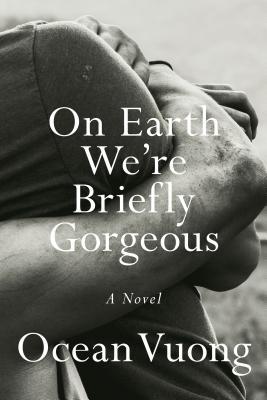
 Young adult author Jeff Zentner (The Serpent King; Goodbye Days; Rayne and Delilah's Midnite Matinee) gave a shot out on Twitter to Ocean Vuong's On Earth We're Briefly Gorgeous, and that was enough for me to add it to my list. Written as a letter from a son to a mother, it will tell of events from even before his lifetime, offering surprising revelations and heartbreaking truths.
The Situation: The narrator, who the reader will only know as Little Dog, though he insists he has had many names, grew up with his single mother and grandmother in Hartford, Connecticut. Now in his twenties, Little Dog has decided to write a letter to his mother, even though he knows she cannot read English. This letter will contain not only a history of the mother and son, but also of what happened in Vietnam, during the war. Jumping back and forth through time, Little Dog will tell his story, his mother's story, and even his grandmother's story, with everything leading up to how they all got here. He will recall days spent with his mother at the nail salon she worked at; his job at a local tobacco farm where he will meet a boy who will upend his world; even the time he spent with the man he knows as his grandfather. But his mother remains at the center of the story, the focus of a troubled history.
The Problem: As a young boy, being Vietnamese was enough of a reason for the other boys to pick on him. It also did not help that Little Dog's English was not that great. And then there was the time he was seen wearing one of his mother's dresses, and another time when the bike he bought for himself was bright pink. But being picked on by the other children was not Little Dog's primary concern. On given any day, at any given moment, his mother could turn on him, offering severe forms of physical abuse that would sometimes cause his grandmother to attempt to shield him. During one attempt at running away from home, it would be Grandma Lan who would call him back, while also acknowledging that her daughter is incredibly sick. If small, everyday transgressions could cause his mother to snap, what would she do if she learned how he felt about boys? Ultimately, Little Dog wants to tell this story, and wants his mother to hear it.
Genre, Themes, History: This is a fiction novel that is more or less set in and around modern day Hartford, Connecticut. As the only child of a Vietnamese immigrant, Little Dog will learn to navigate America's northeastern seaboard, while also learning to navigate his mother's moods. Her earlier life in war-torn Vietnam has left behind enough trauma that she lets it spill out and onto her son. It is with the aid of his grandmother that he will learn to survive life with his mother. And it is his later interactions with a boy on a tobacco farm that will introduce Little Dog to the hard reality of drugs and addiction. Jumping easily from past to present to future, sometimes all within the same paragraph, Little Dog leaves no part of his short life unexplored. And while he knows his mother cannot read, he still insists on writing the letter, seemingly in a vain hope that she will finally hear him and see him. But what does it mean to insist on communicating with someone in a way in which you know they will never get the message?
My Verdict: I wanted to like this book more, but alas, I felt only slightly more than 'meh' about it. It is indeed beautifully written, and an open and honest look at a young boy's life with his mother. And it could possibly be my aversion and lack of experience with poetry that hindered my overall enjoyment of the book, but some things did not connect for me. Again, the book is well-written, and I do not feel like there was something Vuong was missing or leaving out. If anything, the author should be praised for how much he manages to explore in less than 300 pages. It could be that the book just isn't for me, but I am sure there are many others who will connect with it.
Favorite Moment: It is actually hard for me to pinpoint one moment that was my favorite. Maybe it was the narrative style, but no one part of the book really stands out for me.
Favorite Character: Grandma Lan is both nurturing and tough, managing to provide some level of stability in Little Dog's life.
Recommended Reading: Shelter by Jung Yun also explores the complicated relationship between a son and his abusive parents.
 Last year I decided to pick up Monday’s Not Coming by Tiffany D. Jackson, and was excited when I found out about her new novel and today’s selection, Let Me Hear a Rhyme. Set in Brooklyn in 1998, a year after the death of The Notorious B.I.G, the book follows three teenagers as they come to grips with a death in their own neighborhood, and decide that this time, the young man will not be another statistic or name people read in the newspaper.